


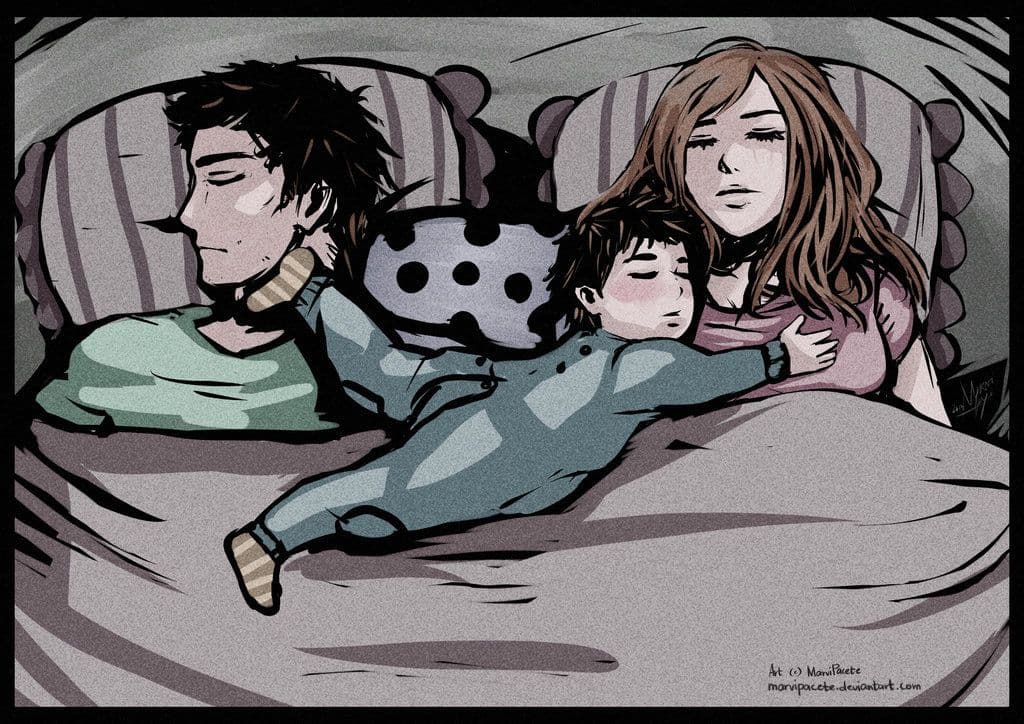
To ask what the Oedipus complex is presumes it to be a thing among other things—a psychological object we can isolate, define, and place on the shelf of Freudian curiosities. But the moment we treat it as a fixed entity, we lose sight of the living drama it names. The Oedipus complex is not an inert concept; it is a map of a storm, a pattern of longing and terror, love and rivalry, that Freud claimed structures the very becoming of a human subject. It enters the consulting room not as a diagnosis but as a confession of childhood's unspoken battles: the child who wished a parent absent, who invented elaborate reasons to sleep between the parental bodies, who raged against the incomprehensible bond from which they felt excluded.
This exploration does not aim to reaffirm or debunk Freud's theory, but to inhabit its tensions. We will treat the Oedipus complex as a philosophical and psychological lens through which desire, authority, identity, and morality come into view. We will examine its origins in ancient myth, its elaboration in psychoanalysis, the criticisms that have shadowed it, and the unexpected ways it echoes through adult lives—in boardrooms, in beds, in the digital arenas where we perform our identities. The question is not simply what the Oedipus complex is, but what it does to our understanding of love, rivalry, and the hidden law that governs our inner world.
The Myth Before the Theory
Sophocles and the Unknowing King
Long before Freud made Oedipus a household name, the myth served as a meditation on fate, knowledge, and blindness. Oedipus, abandoned in infancy, unknowingly kills his father Laius at a crossroads and marries his mother Jocasta. The tragedy lies not in perverse desire but in the unthinkable becoming real. The horror emerges when Oedipus discovers what he has done—the catastrophic gap between his conscious intentions and the reality of his actions. This is the first philosophical insight the myth offers: that we can be profoundly estranged from the meaning of our own acts. The unconscious, avant la lettre, reveals itself in the chasm between Oedipus's self-knowledge and the truth that has already structured his life.
Why Freud Chose This Myth
Freud was not selecting an arbitrary story to illustrate a psychological theory; he was claiming that the myth's power across centuries testified to a universal structure of unconscious fantasy. The audience's horror, Freud argued, was not a reaction to an alien perversion but a recognition of a buried desire. Every spectator has once wished to be the sole object of the mother's love and to eliminate the rival father. The myth externalizes an internal drama. Yet Freud's reading also transforms the myth: where Sophocles presents a destiny imposed by the gods, Freud locates the source inside the child's own mind. This shift from external fate to internal drive marks the birth of psychoanalysis as a hermeneutics of desire. The Oedipus complex, then, is not merely a stage; it is a reinterpretation of what it means to be a subject—one who desires, transgresses, and suffers under the weight of a law that is at once cultural and psychic.
The Freudian Formulation: A Structure of Desire
The Positive and Negative Oedipus
When people speak of the Oedipus complex, they usually mean the positive form: the child's erotic attachment to the opposite-sex parent and rivalry with the same-sex parent. Freud, however, insisted on a negative form as well—loving the same-sex parent and rivalrous hatred for the opposite-sex one. In reality, the two forms coexist in every child, producing a bisexual constellation of desire and identification. The Oedipus complex is not a neat triangle but a tangled quadrilateral of impulses. A boy does not simply desire his mother and hate his father; he also identifies with the mother, desires the father's love, and resents the mother for possessing the father. These contradictory currents generate the ambivalence that will mark all future intimate relationships. The simplification of the Oedipus into a heteronormative script has obscured Freud's more radical insight: that desire is inherently plural, ambiguous, and self-contradictory.
The Psychosexual Timeline
Classical theory places the Oedipus complex in the phallic stage, roughly between ages three and six. It follows the oral and anal phases and precedes the latency period. In this phase, the child becomes intensely aware of anatomical differences and weaves theories about the presence or absence of the penis. These theories are not biological facts but psychic realities; they organize the child's world into categories of having and lacking. The Oedipus complex is thus inseparable from the child's confrontation with difference, power, and vulnerability. The phallic stage is not simply about genitality; it is about the child's effort to position themselves within a universe of desiring and desired bodies, where some seem to possess what others do not.
Castration Anxiety and the Entrance into Law
The Threat That Organizes the Psyche
No aspect of the Oedipus complex is more unsettling—or more frequently dismissed—than castration anxiety. It is tempting to read it literally, as a fear of genital mutilation, and then to reject it as absurd. But the power of castration anxiety lies in its symbolic dimension. It is the fear of losing the possibility of being the phallus for the mother, of being relegated to a position of lack. The threat, whether explicit or implicit, is that the child's desire will be met not with fulfillment but with a devastating prohibition. This threat, Freud argued, is what precipitates the dissolution of the Oedipus complex. The child renounces the impossible desire and identifies with the rival parent, internalizing the parental authority as the superego. The law that says “you cannot have your mother” becomes the internal voice that says “you ought not.” Castration anxiety is the pivot from desire to morality, from the pleasure principle to the reality principle.
The Superego as Heir
The superego, then, is the monument left behind by the Oedipus complex. It is not merely a collection of parental prohibitions but the psychic structure that makes us self-reflective, self-critical, and capable of guilt. The harshness of the superego often exceeds any actual parental severity because it draws on the child's own aggression toward the rival parent. That aggression, thwarted, turns inward. The child who hated the father becomes the adult who despises their own forbidden desires. The Oedipus complex thus founds a permanent internal conflict: between the unconscious wish that never fully dies and the internalized authority that never fully forgives. This conflict is the engine of neurosis, but also of civilization, art, and moral striving. The human being becomes a creature split between longing and prohibition, and that split is the Oedipal legacy.
Aspect | Pre-Oedipal | Oedipal (Phallic) | Post-Oedipal (Latency) |
|---|---|---|---|
Primary focus | Dyadic bond with mother | Triadic conflict, rivalry, desire | Repression, sublimation |
Psychic structure | Id dominant, ego emerging | Emerging superego via identification | Consolidated superego, ego defenses |
Relation to law | Law is external, maternal | Law is encountered as paternal prohibition | Law is internalized, self-regulating |
Desire | Unbounded, narcissistic | Triangulated, incestuous, rivalrous | Redirected toward non-familial objects |
Anxiety | Loss of object | Castration anxiety | Moral anxiety, guilt |
The Oedipus in the Feminine: A Troubled Symmetry
The Electra Complex and Its Discontents
Freud's attempt to map the Oedipus complex onto girls produced some of his most controversial and, to many, unsatisfactory formulations. The so-called Electra complex (a term Freud never endorsed but which Jung coined and later psychoanalytic literature adopted) posits that a girl, upon realizing she lacks a penis, holds the mother responsible and turns toward the father in hope of receiving a baby as a symbolic substitute. The mother becomes a rival, and the girl's eventual femininity is sealed by her acceptance of her “castrated” condition. This narrative has been justly criticized for its phallocentric bias and for conflating biological anatomy with psychic destiny.
Rethinking the Female Oedipus
Later analysts, particularly women like Karen Horney, Melanie Klein, and Nancy Chodorow, reframed the female Oedipus not as a derivative of penis envy but as a primary constellation with its own dynamic. The girl's love for the father is not simply a flight from the devalued mother; it is a genuine erotic and identificatory bond. Moreover, the pre-Oedipal attachment to the mother is often far more intense and enduring for girls, complicating the simple triangle. The female Oedipus is better understood as a negotiation of sameness and difference within the maternal matrix, where desire for the father is also a means of separating from the overwhelming bond with the mother. The Oedipus complex, in this view, is not a single narrative but a family of dramas structured differently by gender, but also by the unique constellation of every family romance.
The Lacanian Reinterpretation: From Biology to the Symbolic
Three Registers, One Drama
Jacques Lacan's return to Freud fundamentally reshaped the Oedipus complex by relocating it from biological drives to the realm of language and the symbolic order. For Lacan, the Oedipus is not about flesh-and-blood parents as much as it is about the Name-of-the-Father—a signifier that represents the law of culture, language, and prohibition. The mother, in the imaginary dyad, is the child's all-encompassing universe, the source of satisfaction and the enigma of her own comings and goings. The father intervenes not as a person but as a third term that breaks the dyadic fusion. He represents the fact that the mother's desire is elsewhere, that she is not complete without something beyond the child. This intervention introduces lack, the recognition that we are not the phallus that would fill the mother's lack, and that desire is always desire of the Other.
The Paternal Metaphor and the Birth of the Subject
Lacan's formulation allows us to understand the Oedipus complex as a necessary passage from the imaginary (the realm of dual relationships, mirror images, and illusory wholeness) to the symbolic (the realm of language, law, and social pact). The paternal metaphor substitutes the Name-of-the-Father for the mother's desire, installing the child in a universe of meaning structured by absence and difference. The resolution of the Oedipus is not identification with the aggressor in a biological sense, but accession to the symbolic order—the capacity to speak, to desire within the limits of language, and to take one's place in a chain of generations. For Lacan, psychosis occurs when the paternal metaphor is foreclosed, when the Name-of-the-Father is never installed, leaving the subject outside the shared symbolic reality. This elevates the Oedipus from a childhood phase to a structural condition of subjectivity itself.
“What the Oedipus complex reveals is not a childish fantasy we outgrow, but the founding alienation of human desire: we come to want only through the prohibition of what we wanted first, and we spend our lives seeking substitutes for that original, impossible object.”
The Cultural Universality and Its Critics
The Anthropological Challenge
Is the Oedipus complex universal? Bronisław Malinowski's fieldwork in the Trobriand Islands, where the maternal uncle rather than the biological father wields authority, seemed to challenge the Freudian thesis. Malinowski argued that in matrilineal societies, the Oedipus complex would take a different shape, with rivalry directed at the uncle and desire for the sister (prohibited by the strictest taboo). Freud's defenders, however, including Ernest Jones, countered that the underlying structure of triangulation, prohibition, and displacement remains invariant, even if the specific actors change. The debate turns on what we mean by universal: is the Oedipus a fixed biological script, or is it a formal structure that cultures fill with different content? The latter view preserves the psychoanalytic insight without cultural imperialism.
The Family Is Never Just Biological
The Oedipus complex, whether in Vienna or the Trobriands, operates not on raw biology but on function. What matters is who occupies the position of the nurturing primary object, who represents the law and the outside world, and how the child negotiates the boundary between these poles. In single-parent families, same-sex parent families, or kinship structures with multiple caregivers, the Oedipal drama still unfolds, though its choreography differs. The child will still face the mystery of a caregiver's desire that is not exclusively directed at them, the frustration of exclusion, and the need to find a place in a network of relationships that precedes and exceeds them. The Oedipus complex, reconceived, names this existential predicament, not a specific family photograph.
The Oedipal Echo in Adult Relationships
Choosing a Partner, Repeating a Pattern
Freud observed that adult love-object choices often bear the unconscious imprint of the Oedipal figures. The man who marries a woman whose voice or temper recalls his mother's, the woman who is drawn to older, authoritative men—these are not mere coincidences. They are compromise formations, ways of satisfying the prohibited desire in disguised form while also placating the superego by choosing someone sufficiently different from the original object. The bedipal legacy also manifests in the rivalries that infiltrate adult relationships: the unexplained tension with a same-sex boss, the competitive jealousy among siblings that resurfaces in workplace dynamics, the fear of being excluded from a dyad. Romantic love, in this light, is never purely a meeting of two individuals; it is a crowded theater where the ghosts of childhood watch and whisper.
Triangulation in the Consulting Room
The therapeutic relationship itself becomes an Oedipal stage. The patient may fall in love with the analyst, revive old rivalries with imagined others who claim the analyst's attention, or produce dreams thick with parental symbolism. Transference is the living repetition of the Oedipus complex. Its interpretation—showing the patient how they are re-enacting ancient dramas with the analyst—is the central tool of analytic work. The end of a deep analysis is sometimes called a “resolution of the transference neurosis,” which is another way of saying a second, more conscious passage through the Oedipus, this time with an ending that allows for genuine separateness and a less tormented desire.
The Oedipus Complex and Identity Formation
Beyond Gender: The Complex as a Generator of Selfhood
It is a mistake to reduce the Oedipus complex to a story about gender acquisition, though that is part of it. At a deeper level, the Oedipus answers the question: How does one become a subject who can say “I” in a world of others? The child enters the Oedipus as a creature of drives and emerges as a person with a name, a place in a genealogy, and a sense of what is permitted and prohibited. Identity is not simply given; it is forged in the crucible of Oedipal conflict. The identifications the child makes—with the parent of the same sex, with the parent's desire, with the very law that forbids—are the building blocks of the ego ideal. Who we think we are is inseparable from whom we have loved, hated, and feared during that early, wordless period.
The Unresolved Oedipus and the Fractured Self
When the Oedipus complex is not adequately navigated—whether because of a seductive or absent parent, an excessively harsh or absent law, or a trauma that forecloses symbolic resolution—the adult may suffer a fragile identity. The neurotic oscillates between desire and guilt, the perverse subject stages a dramatic disavowal of castration, and the psychotic lives outside the shared symbolic order. These are extreme cases, but they illuminate the stakes. A successful Oedipus is not one that leaves no scars; it is one that permits the subject to desire without being destroyed by the prohibition, to love without being swallowed, to compete without annihilating. The Oedipus complex, resolved well enough, yields the capacity for ambivalence, creativity, and the acceptance of limits.
Criticisms and Revisions: The Complex Under Fire
The Feminist Critique
Feminist thinkers from Simone de Beauvoir to Juliet Mitchell have engaged the Oedipus complex as both a description of patriarchal structures and a site of resistance. The charge is that Freud universalized the particular: the patriarchal family of Victorian Europe. The equation of the phallus with power and desire, the depiction of female sexuality as a lack, the normalization of heterosexual resolution—all these have been challenged. Yet some feminists, notably Mitchell, have argued that the Oedipus complex, especially in its Lacanian form, can be a tool for understanding how patriarchal culture installs itself in the psyche, and thus how it might be subverted. The Name-of-the-Father is not a biological necessity but a cultural signifier; if we change the symbolic order, the Oedipus might be rewritten.
Empirical and Cross-Cultural Scrutiny
Empirical psychology has largely moved away from the Oedipus complex, citing a lack of falsifiable predictions and experimental evidence. Attachment theory, cognitive developmental psychology, and evolutionary psychology offer alternative accounts of parent-child dynamics that do not rely on sexual rivalry. Yet the debate may be misframed. Psychoanalysis does not claim to be an experimental science in the positivist sense; it is a hermeneutic discipline that deals with meaning, not mechanism. The Oedipus complex is not a hypothesis to be verified in a lab but a pattern of significance that emerges in the intimate narratives of patients. Its truth is clinical, not statistical. The more damning critique is not that the Oedipus is unprovable, but that it has sometimes been applied dogmatically, blinding analysts to the unique contours of each person's history.
Criticism | Source | Response from Psychoanalysis |
|---|---|---|
Phallocentric, marginalizes female desire | Feminist theory, Horney | Revisions focus on primary femininity, pre-Oedipal mother; Lacan reads phallus as signifier, not organ |
Lacks cross-cultural validity | Malinowski, cultural anthropology | Oedipus as formal structure, content varies; functions of prohibition and desire are universal |
Not empirically testable | Behavioral psychology, Popperian critique | Psychoanalysis is interpretive, not positivistic; truth of the Oedipus lies in clinical efficacy and subjective resonance |
Normalizes heteropatriarchal family | Queer theory | Negative Oedipus complex acknowledges universal bisexuality; Lacan’s symbolic order can be queered |
Overemphasizes early childhood determinism | Developmental psychology | Later experiences rework Oedipal themes; analysis allows retrospective revision |
The Oedipus in the Digital Mirror
Desire and Rivalry in the Age of Social Media
The Oedipus complex may be a structure of the psyche, but it finds expression in the textures of every era. Social media platforms are saturated with Oedipal dramas. The curated self-image, the desperate performance for an invisible audience, replicates the child's wish to be the phallus that completes the mother's desire. The “like” is a digital token of being desired, of triumphing momentarily over the rival. Influencer culture literalizes the rivalry with the same-sex parent: the young man who models himself after a charismatic older figure, simultaneously adoring him and seeking to surpass him; the young woman who competes with a mother figure for the gaze of an approving public. The digital sphere externalizes the superego as an algorithm that judges, rewards, and punishes, often with a harshness disproportionate to the “crime.”
The Algorithm as Paternal Function
If the Name-of-the-Father is the signifier that limits jouissance and installs law, one could argue that the algorithmic curation of desire serves a similar function—or perhaps displaces it. The algorithm knows what we want before we do; it feeds us objects of desire while enforcing a subtle law of conformity. It prohibits the fully non-commercial, the truly anarchic. Yet it is a father without a face, a law without a voice, and it fails to provide the symbolic mediation that a true paternal function offers. The result is a generation suspended in a kind of perpetual Oedipal crisis: desiring endlessly, rivalrous without resolution, haunted by a superego that takes the form of metrics and comparison, yet lacking the internal structure to metabolize the anxiety. The Oedipus complex is not obsolete; it is hiding in plain sight, rewritten in code.
“To be human is to desire what we cannot have, and to become who we are through the very prohibition that shapes that desire. The Oedipus complex names this tragic, generative knot—the place where love and law, longing and limit, are woven together into the fabric of a self.”
The Philosophical Residue: Desire, Law, and the Question of Freedom
Are We Ever Beyond Oedipus?
A tempting fantasy, both inside and outside psychoanalysis, is that the Oedipus complex is a stage we outgrow, a childhood illness from which we recover. But if the Oedipus is the gateway to the symbolic order, then there is no “beyond” it—only different positions within its field. Even the attempt to renounce all authority, to reject all prohibition, is a negotiation with the law, a defiant stance that still acknowledges the father by its very rebellion. The bohemian who floats from lover to lover, refusing commitment, may be living out a negative Oedipus, forever fleeing the scene of triangulation. The ascetic who denies desire may be enacting an identification with the renounced object. Freedom, if it exists, is not the absence of the Oedipal structure but the capacity to play within it, to recognize its constraints, and to find in them the conditions for a life that is not merely repetitive.
The Oedipus Complex as a Hermeneutic of the Soul
Perhaps the most enduring value of the Oedipus complex is not as a developmental theory but as an interpretive key to the darkness of the human heart. It names the hidden logic of our most intimate joys and sorrows: why we sometimes love those who hurt us, why we fear success as much as failure, why we cannot stop comparing ourselves to others, why the loss of a love feels like the end of the world. It reveals that our identities are not self-generated but borrowed from the people who first loved and failed us. It insists that there is no love without aggression, no law without guilt, no self without the other. To ask “what is the Oedipus complex?” is to ask what it means to be a creature whose deepest attachments are formed in the shadow of impossibility.
Clinical Vignettes: The Oedipus Alive in the Room
The Man Who Could Not Surpass His Father
A successful architect enters analysis complaining of a persistent sense of fraudulence. His father, a charismatic but emotionally absent businessman, had always overshadowed him. In his dreams, he is building structures that collapse. Over time, it emerges that his career triumphs feel like theft—of a potency that rightfully belongs to the father. The Oedipus here is not a literal wish for the mother but a rivalry frozen in guilt. His ambition is strangled by an unconscious equation: to succeed is to destroy the father, and to destroy the father is to lose his love forever. The analysis becomes a slow process of disentangling ambition from murder, self-assertion from betrayal. The Oedipus complex, in this life, is not a theory; it is the invisible architecture of his suffering.
The Woman Who Chose Unavailable Men
A woman in her thirties cycles through relationships with men who are married, distant, or emotionally closed. She is the child of a doting but depressed mother and a father who left when she was five. Her Oedipal drama is not a simple wish for the father but an impossible attempt to revive the lost father and win his love retroactively, while simultaneously identifying with the abandoned mother and punishing herself for wanting more. Each unavailable man is a substitute for the father who cannot fully arrive, and each breakup re-enacts the original abandonment. The pattern is Oedipal in its deepest structure: a desire forever fixed on an object that is both intensely desired and profoundly forbidden.
Closing Reflection: The Complex as a Living Question
The Oedipus complex refuses to become a museum piece. It persists in our art, our institutions, our private anguishes, and our nightly dreams. It has been revised, rejected, celebrated, and lamented, but it has not been replaced. Perhaps this is because it addresses something irreducible about the human condition: the fact that our first love is for a person we cannot keep, that our first hatred is for a rival we cannot eliminate without self-destruction, and that our entry into the social world requires a sacrifice that leaves a permanent mark. The Oedipus complex is not a problem to be solved but a riddle to be lived. Its importance lies not in providing a definitive answer to the question of desire but in refusing to let us forget that the question exists.
What we do with the Oedipus complex—whether we use it to explore our own histories or dismiss it as archaic fantasy—reveals something about our relationship to the unknown in ourselves. Those who recoil from it may be defending against its unsettling intimacy. Those who embrace it as a formula may be seeking to tame it. A psychoanalysis worthy of the name holds the Oedipus complex lightly but seriously, as a compass that points toward the magnetic north of human longing and prohibition, without ever pretending that the destination can be reached. The complex is important not because it is true in a factual sense, but because it is living in a psychological sense. And as long as children love, compete, and wonder at the mysterious bond from which they feel excluded, the Oedipus complex will remain a map that leads into the heart of our first and most formative attachments.