


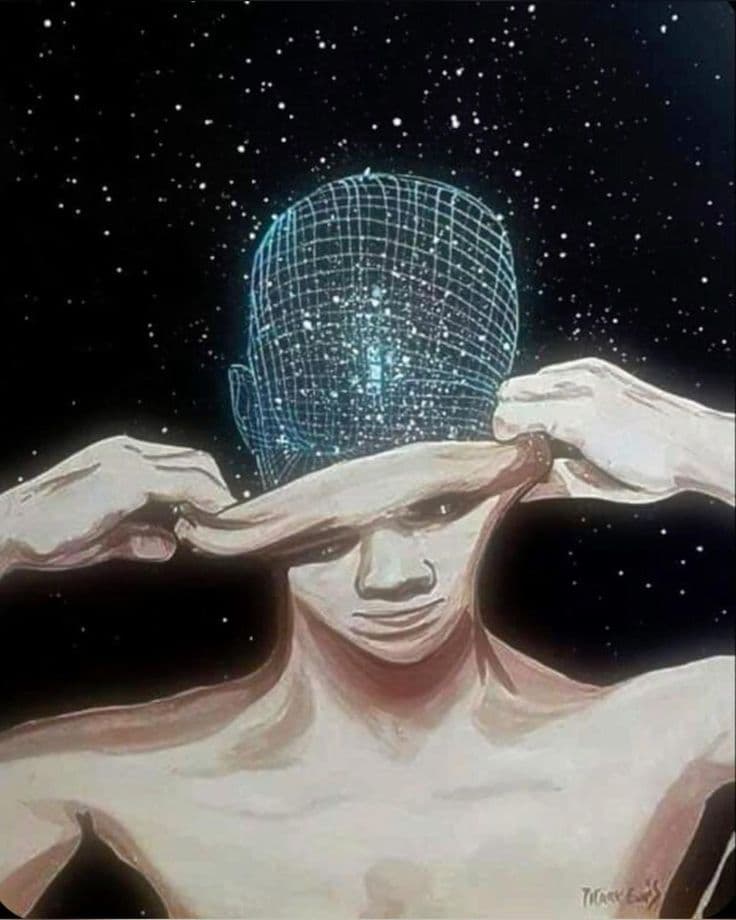
The question seems straightforward, as though the unconscious were a character in a play with a designated function: to hold repressed memories, to generate dreams, to cause slips of the tongue. This is the popular understanding — the unconscious as a kind of mental basement where unacceptable desires gather dust. But this spatial metaphor, however intuitive, fundamentally misleads. The unconscious is not a place where things are stored. It is a process — a continuous, active, structuring force that shapes perception, memory, judgment, and action from the inside out. Its role is not to hide content but to organize experience in ways that remain invisible to the very subject whose experience is being organized.
To ask about the role of the unconscious is therefore to ask about the limits of self-knowledge. What portion of your decisions, your attractions, your anxieties, your creative inspirations, and your failures actually originates in conscious deliberation? And what portion arises from a region of the mind to which you have no direct access — but which nonetheless expresses itself constantly, in the jokes you tell, the people you distrust for no reason, the dreams that wake you at 3 a.m., and the patterns you swore you would never repeat? The unconscious is not a sideshow. It is the main event, disguised as a supporting actor.
This article traces the unconscious through its many roles: as a censor and a creator, a saboteur and a savior, a keeper of the past and a projector of the future. It will not provide a final definition — because the unconscious, by its nature, resists final definition. It will instead offer a series of lenses through which to recognize its operations in your own life, and to ask, with greater precision, what it means to be driven by forces you cannot name.
1. The Unconscious as Structure, Not Content
The most persistent misconception about the unconscious is that it contains things — forgotten events, hidden wishes, secret traumas. This is the archaeological model: dig deep enough, and you will find the artifact. Freud himself sometimes spoke this way, especially in his early work. But the more mature psychoanalytic position is subtler. The unconscious does not have contents in the way a box has contents. It has processes — modes of thinking (primary process) that operate by condensation, displacement, and symbolization, indifferent to logic, time, and negation.
What this means is that the unconscious is not a repository of specific memories (though memories can become unconscious through repression). It is a way of relating to all memories, perceptions, and desires. Two people can experience the same childhood event. One integrates it into a coherent life narrative; the other develops a phobia of elevators. The difference is not in the event but in the unconscious processing of the event — the way the mind has organized its response without conscious awareness.
The role of the unconscious, then, is to generate the form of experience, not just the hidden content. It is the grammar of mental life, not the vocabulary. You do not need to know the specific repressed memory to understand why you panic in enclosed spaces. You need to understand the unconscious logic that connected the original event to the symptom — a logic of equivalence (this stands for that), of timing (then becomes now), of disguise (the fear of the father becomes the fear of the elevator). This is why psychoanalytic interpretation never ends with "You are afraid because X happened." It asks, instead, "What is the structure of this fear? How does it operate? What does it do in your life now?"
"The unconscious is the discourse of the Other." — Jacques Lacan (a reminder that the unconscious is structured like a language, not like a warehouse)
This structural view has a radical implication: you cannot empty the unconscious. There is no therapy that will make it fully conscious, no meditation that will dissolve it, no enlightenment that will leave you with nothing but pure awareness. The unconscious is not an accumulation of pathologies to be purged. It is the necessary foundation of any subjectivity. To be conscious at all is to have an unconscious. Its role is not to trouble an otherwise peaceful mind. It is to make the mind work — to provide the latent connections that give manifest experience its texture, its strangeness, its depth.
2. Beyond Repression: The Unconscious as Active Filter
When most people hear "unconscious," they think of repression — the active forgetting of unacceptable wishes. Repression is indeed one of the unconscious’s most important functions. But it is only one. The unconscious also selects what comes to consciousness. Every moment, your sensory environment presents thousands of stimuli: the hum of the refrigerator, the texture of your shirt, the pressure of the chair, the sound of distant traffic, the flicker of the screen, the memory of this morning’s argument, the anticipation of tonight’s dinner. The vast majority never reach awareness. Someone — or something — is choosing what to admit. That someone is not a homunculus. It is the unconscious, operating according to principles that have nothing to do with your conscious preferences.
Consider the phenomenon of perceptual defense: people take longer to recognize emotionally threatening words (e.g., "cancer," "failure," "death") than neutral words, even when the words are presented so briefly that conscious recognition is impossible. The unconscious has already classified the word as dangerous and slowed down the recognition process — without any conscious intention. The role of the unconscious here is not to store a memory but to gatekeep perception itself.
This filtering role extends to memory retrieval. When you try to remember a name, you may feel it on the tip of your tongue — a state of knowing without access. The unconscious is actively inhibiting the retrieval, for reasons you cannot discern. Sometimes the inhibition lifts on its own; sometimes the name remains stubbornly hidden. The unconscious is not a passive archive. It is a dynamic system of anticathexes — counter-forces that prevent certain ideas from achieving the level of activation required for consciousness. The role of the unconscious is to maintain this economy of excitation, investing energy in some representations and withdrawing it from others, always below the threshold of awareness.
This challenges the fantasy of conscious control. You do not decide what you perceive or remember. You experience the result of unconscious decisions. The feeling that you are actively scanning your environment or searching your memory is largely a post-hoc narrative. The real work happens elsewhere. The role of the unconscious is to be that elsewhere — and to ensure you never catch it in the act.
3. The Unconscious in Symptom Formation: The Body Speaks What Words Cannot
Perhaps the most clinically significant role of the unconscious is the production of symptoms: physical pains without organic cause, compulsive rituals, phobias, panic attacks, sexual dysfunctions, eating disturbances, and a host of other phenomena that seem to happen to the person rather than being chosen by them. The psychoanalytic claim is that symptoms are not random malfunctions. They are meaningful formations — the unconscious’s solution to a conflict that could not be resolved consciously.
A woman develops a cough that appears only when she is in social situations, especially when she is about to speak. Medical exams find nothing. A psychoanalytic investigation might reveal that the cough began after a incident where she wanted to say something angry to her mother but swallowed the words. The cough now enacts the swallowed words — a bodily expression of the repressed anger. The symptom has a meaning (the unspoken protest) and a gain (it discharges the drive energy without risking the relationship). The symptom is not a mistake. It is a compromise: the id gets partial expression, the superego gets to avoid open conflict, and the ego gets a solution that allows functioning, however impaired.
The role of the unconscious in symptom formation is that of a compromise-formation engine. It continually scans for conflicts and generates solutions — solutions that are always partial, often costly, but better (from the unconscious’s perspective) than the alternatives (psychosis, suicide, total paralysis). A phobia, for example, converts free-floating anxiety into a specific, avoidable object. The cost is that you cannot ride elevators. The benefit is that you do not experience the nameless dread that would otherwise fill your days. The unconscious made a trade. It chose the lesser evil.
This perspective radically alters how one might approach a symptom. The question is not "How do I make this cough go away?" It is "What is the cough doing for me? What conflict would I have to face if the cough disappeared?" The symptom is not an enemy. It is a messenger — one that speaks in a bodily language that the conscious mind has not learned to translate. The role of psychoanalysis is not to kill the messenger but to learn the language.
4. Dreams: The Unconscious as Nightly Playwright
Freud called dreams "the royal road to the unconscious." This is often misunderstood as meaning that dreams provide direct access to hidden truths. In fact, dreams are not the unconscious itself; they are the unconscious’s product — heavily disguised, distorted, and encoded. The role of the unconscious in dreaming is to protect sleep. A drive presses for expression (sexual, aggressive, etc.). If it expressed itself directly, it would wake you up. So the unconscious transforms the drive into a dream — a hallucinatory wish-fulfillment that satisfies the drive just enough to allow sleep to continue.
The dream work (condensation, displacement, symbolization) is the unconscious’s editorial process. It takes raw drive energy and clothing it in images that are unrecognizable to the censor (the superego, still active during sleep). The dream you remember is the manifest content — a decoy. The latent content (the actual drive wish) remains hidden, accessible only through free association. The unconscious’s role is not to reveal but to disguise — and to do so with such artistry that even the dreamer does not recognize their own desires.
This raises a fascinating question: why does the unconscious bother to disguise anything? Because the superego never sleeps entirely. Even in dreams, moral censorship operates. The unconscious must craft a narrative that passes inspection. The dream is thus a negotiated settlement between drive (id) and prohibition (superego), mediated by the ego’s residual functioning during sleep. The dream’s strangeness — its illogical jumps, its impossible juxtapositions — is not a sign of mental chaos. It is the signature of the censorship process. The more bizarre the dream, the more ferocious the conflict.
What role do dreams play in waking life? They offer a weekly (or nightly) report from the unconscious — a bulletin about conflicts that have not been resolved, wishes that have not been acknowledged, fears that have not been faced. To attend to dreams is to invite the unconscious into the consulting room. The dreamer who says, "I don't remember my dreams," is not lacking dreams. They are lacking the practice of attending to them. The unconscious continues to write its nightly plays. Whether you read them is up to you.
5. Slips, Jokes, and Everyday Life: The Unconscious as Leak
Freud’s Psychopathology of Everyday Life demonstrated that the unconscious does not require a clinical setting to express itself. It leaks through the smallest gaps in conscious control: the forgotten name, the misplaced key, the slip of the tongue that says the opposite of what you intended, the joke that lands too hard, the gesture that betrays hidden irritation.
A parapraxis (Freud’s term for a slip) is not a random error. It is an act of substitution: one word replaces another because the unconscious has judged the intended word too dangerous or too revealing. You mean to say, "I am glad to see you," but you say, "I am sad to see you." The slip reveals an unconscious ambivalence. You mean to introduce your husband as "my husband," but you say "my father" — a slip that suggests an unconscious fusion of the two figures. The conscious mind is horrified. The unconscious is amused.
The role of the unconscious in everyday life is to ensure that even the most disciplined self-presentation is never fully successful. No matter how carefully you curate your words, your actions, your social media persona, the unconscious will find a way to poke through — a typo that reads like a confession, a photo that reveals more than intended, a moment of forgetfulness that exposes a priority you did not know you had. This is not a curse. It is a form of honesty that the conscious mind cannot achieve on its own. The unconscious tells the truth, but it tells it in code.
Humor provides another window. Jokes, according to Freud, generate pleasure by releasing psychic energy that would otherwise be bound up in repression. A joke about sex or death allows a momentary lifting of the superego’s prohibition. The laughter is the sound of the unconscious getting what it wants. People who cannot laugh at certain topics (who find them "not funny" with peculiar intensity) are revealing the strength of their repressions. The unconscious’s role in humor is to provide the forbidden material; the ego’s role is to disguise it just enough to evade censorship; the superego’s role is to protest weakly, then join the laughter.
To notice your own slips, forgettings, and preferred jokes is to begin a relationship with your unconscious. It is not a matter of interpreting each slip as a deep revelation. It is a matter of becoming curious about the gap between intention and execution — a gap that the unconscious is constantly widening, just a little, as if to remind you who is really in charge.
6. The Unconscious in Relationships: Projection and Transference
The unconscious does not operate in isolation. It organizes your perception of other people — usually by distorting it. Two mechanisms are particularly important: projection and transference. Projection is the attribution of one’s own unacceptable feelings or traits to another person. You are angry, but you cannot tolerate your anger, so you perceive the other person as angry at you. You are attracted to someone inappropriate, but the attraction is forbidden, so you convince yourself that they are attracted to you. Projection preserves self-image at the cost of accurate perception. Its role is to keep the unconscious inside by expelling it outward — but the expulsion is never complete, because the unconscious always leaks back in the form of irrational certainty about the other’s motives.
Transference is projection’s more complex cousin. It is the unconscious displacement of feelings, expectations, and relational patterns from past figures (especially parents) onto present figures. You respond to your boss as if she were your critical father. You fall in love with someone who reminds you — in no conscious way — of a caregiver who was simultaneously nurturing and abandoning. Transference is not a rare phenomenon. It is the default mode of human relating. Every significant relationship is a palimpsest: the present written over the past, with the past showing through in every sentence, every silence, every expectation.
The role of the unconscious in transference is to conserve psychic energy. If every new relationship required an entirely fresh response, the mind would be overwhelmed. The unconscious therefore applies existing templates — schemas, in cognitive terms; object relations, in psychoanalytic terms — to new situations. This saves effort. It also guarantees repetition. The person who unconsciously expects abandonment will behave in ways that provoke abandonment. The person who unconsciously expects admiration will arrange to be admired — or will become depressed when admiration is not forthcoming. The unconscious’s efficiency is also its tyranny.
Psychoanalysis exploits this by creating a controlled environment (the analytic frame) in which transference can be observed and interpreted. The analysand’s reactions to the analyst — irritation, idealization, boredom, erotic longing — are not about the analyst. They are about the analysand’s unconscious templates, now made visible. The analyst’s role is to refuse the projected role (not to become the abandoning parent, not to return the erotic longing), thereby creating a new experience: the template does not fit. In that mismatch, the unconscious’s grip loosens. Transference is the unconscious’s favorite strategy. And it is also the unconscious’s undoing.
7. Memory and the Unconscious: The Past That Never Passes
Memory is not a recording. It is a reconstruction — and the reconstruction is always colored by unconscious processes. What you remember (and what you forget) is not a function of objective importance. It is a function of repression (active forgetting of threatening material) and screen memories (innocent-seeming memories that stand in for more threatening ones).
A screen memory is a particularly subtle form of unconscious operation. You remember, say, a childhood afternoon when you dropped a glass of milk and your mother laughed. The memory seems trivial. But psychoanalytic investigation might reveal that this memory screens out a more threatening event: an episode of parental violence that occurred around the same time. The dropped glass stands in for the violence — a displacement of affect from the unbearable to the bearable. You remember the milk; you do not remember the fight. But the fight lives on, unconscious, shaping your current reactions to conflict, laughter, and domesticity. The screen memory is not false. It is selective — and the selection was made by the unconscious, not by you.
The role of the unconscious in memory is to maintain a dynamic equilibrium. Too much repression, and the past becomes inaccessible, leaving you condemned to repeat it without understanding. Too little repression, and the past floods the present, leaving you unable to function. The unconscious calibrates the dosage. It allows some memories to surface, others to sink, and still others to appear in disguised form (as dreams, symptoms, slips). The past is never gone. It is simply filed in a cabinet to which you do not have the key — though the cabinet sometimes opens on its own.
This has profound implications for trauma. Traumatic memories often resist ordinary forgetting. They intrude, unbidden, in the form of flashbacks, nightmares, and somatic sensations. The unconscious’s usual defenses have been overwhelmed. The role of the unconscious here is not to repress but to encode the trauma in non-verbal, sensory, implicit forms — forms that cannot be talked away but can, in psychoanalysis, be gradually symbolized and integrated. The unconscious does not forget trauma. It holds it, waiting for the right conditions to release it. Those conditions are the conditions of safety, relationship, and interpretation.
8. Creativity and the Unconscious: The Source of the New
Not all unconscious processes are defensive. The unconscious is also the wellspring of creativity — of art, science, humor, invention. Many creative people report that their best ideas come to them unbidden, in dreams, while showering, during a walk, or at the moment of waking. The conscious mind, having labored over a problem, relaxes its grip. The unconscious continues to work, and suddenly — the solution arrives, fully formed, as if from nowhere. That "nowhere" is the unconscious.
Freud described the creative process as a regression in the service of the ego: the unconscious is allowed temporary freedom (primary process thinking: condensation, displacement, symbolization), and the ego then reshapes the resulting material into a socially acceptable, aesthetically pleasing form. The artist accesses the same raw material that produces dreams and symptoms — but unlike the neurotic, the artist can discipline the material, give it form, and share it with others without shame. The difference between a symptom and a poem is not the presence of unconscious material. It is the ego’s capacity to sublimate — to transform the raw drive energy into something valuable, not merely something tolerable.
The role of the unconscious in creativity is to provide the unexpected connection. Two ideas that consciousness kept separate are fused in a dream, a daydream, a slip. The result is novelty — an association that no logical chain could have produced. This is why creativity cannot be reduced to algorithms or rules. The unconscious is the non-algorithmic core of the mind. It produces the wild card that consciousness then plays.
For the artist or scientist, the challenge is to cultivate access to the unconscious without being overwhelmed by it. Too little unconscious access yields sterile, conventional work. Too much yields chaos — the surrealist’s automatic writing may be interesting, but it is rarely shaped. The creative person learns to invite the unconscious to the party, but to let the ego serve as host. That hosting relationship — between conscious craft and unconscious inspiration — is the secret of lasting work.
9. The Unconscious and the Body: Somatic Expression
The unconscious does not speak only through words, dreams, and slips. It speaks through the body — through tension, posture, breathing patterns, chronic pain, and illnesses with no organic cause. Somatic symptom disorders (conversion disorders in psychoanalytic terminology) are the body’s answer to a conflict that language cannot resolve.
A young soldier develops a paralysis of his left arm. No neurological cause is found. A psychoanalytic interview reveals that he had been about to fire his weapon but suddenly felt revulsion at the order. The paralysis both enacts the inhibition (the arm cannot fire) and expresses the conflict (the arm is caught between obedience and morality). The symptom is not faked. It is as real as any neurological paralysis. But its cause is psychic, not somatic. The unconscious has chosen the body as its medium because the conscious mind would not permit the conflict to be spoken.
The role of the unconscious in somatic expression is to preserve the integrity of the subject. Better to have a paralyzed arm than to be a murderer or a traitor. Better to have a chronic headache than to acknowledge a rage that would destroy a relationship. The unconscious is ruthless in its cost-benefit analysis. It will sacrifice a limb, a sense, a function, if that sacrifice allows the subject to continue existing without psychic collapse. This is not pathology in the sense of "brokenness." It is pathology in the sense of a solution — a desperate, costly solution, but a solution nonetheless.
Psychoanalysis approaches somatic symptoms not as puzzles to be solved by suggesting that the patient "just relax" or "think positively." It approaches them as communications. The therapist listens for the metaphor in the symptom. A tight throat that prevents speaking — what cannot be said? A back that gives out under pressure — what weight cannot be carried? The interpretation of somatic symptoms is delicate; one must never accuse the patient of "causing" their own illness. But one can ask: if your body could speak, what would it be telling us? The answer often leads to the unconscious.
10. The Political Unconscious: Ideology and Culture
The unconscious is not merely personal. It is also collective. The critic Fredric Jameson coined the phrase "the political unconscious" to describe the way that social structures, ideologies, and cultural narratives operate below the level of explicit belief. You do not choose to believe in capitalism, patriarchy, or nationalism as a conscious decision. These ideologies inhabit you — shaping your desires, your fears, your sense of what is possible and what is ridiculous — before you ever have a chance to reflect on them.
The role of the unconscious in politics is to naturalize the contingent. A particular economic arrangement (wage labor, private property) comes to feel like common sense, like the way things have always been and must always be. A particular gender hierarchy (men as agents, women as objects) comes to feel like biological destiny. These are not truths. They are unconscious assumptions, installed by culture and maintained by social reward and punishment. To critique ideology is to make the unconscious conscious — to ask, "Why does this feel inevitable? For whose benefit does it feel that way?"
Social media amplifies political unconscious processes. The algorithm does not care about truth; it cares about engagement. And what engages is unconscious material: moral outrage (projection), status anxiety (superego pressure), tribal belonging (identification with the aggressor). The platform becomes a collective dream machine, generating shared fantasies and shared paranoias. The role of the unconscious here is to serve as a reservoir of affects that the algorithm can tap — fear, desire, envy, rage — without any of the participants knowing why they are so moved.
Psychoanalysis offers a tool for resisting this manipulation: the cultivation of negative capability (the ability to remain in uncertainty) and the willingness to question one’s own certainties. The political unconscious is most powerful when it is invisible. To learn to see it — to ask, "Why am I so sure of this belief? Who benefits from my certainty?" — is to begin the work of political psychoanalysis. The unconscious is not only a private theater. It is the stage on which history performs its dramas.
11. Critiques of the Unconscious: Is It a Useful Fiction?
The concept of the unconscious has been criticized from many angles. Behaviorists denied its existence, arguing that all behavior could be explained by observable stimuli and responses. Cognitive psychologists replaced the dynamic unconscious with the cognitive unconscious — a set of information-processing routines (e.g., visual perception, grammar) that operate automatically but lack the dynamic, conflict-ridden, motivated quality of Freud’s unconscious. Neuropsychologists have found no brain region corresponding to "the unconscious." Philosophers of science have questioned the falsifiability of psychoanalytic claims.
These critiques have merit. The Freudian unconscious is not a scientifically respectable entity in the way that, say, the hippocampus is. But this may be asking the wrong question. The unconscious is not a thing to be located. It is a hypothesis about why human beings behave in ways that contradict their conscious intentions, why they suffer from inexplicable symptoms, why they repeat painful patterns. As a hypothesis, it has generated an enormous amount of useful observation and clinical success. The question is not "Is the unconscious real?" but "Does thinking in terms of the unconscious help us understand and alleviate suffering?"
The table below contrasts the Freudian dynamic unconscious with the cognitive unconscious:
Aspect | Freudian Dynamic Unconscious | Cognitive Unconscious |
|---|---|---|
Content | Repressed wishes, conflicts, traumatic memories | Procedural rules, automatic processes, perceptual routines |
Motivation | Driven by id impulses, defense, repression | No motivation; simply algorithmic |
Access | Accessible only through derivatives (dreams, slips, symptoms) | Accessible through cognitive experiments (priming, implicit memory) |
Relation to consciousness | Actively kept out of awareness by defense | Never conscious because of different format (procedural) |
Clinical implications | Interpretation of conflict can reduce symptoms | Practice and repetition change automatic processes |
Both concepts are useful. They describe different aspects of mental life. The error is to assume that one is true and the other false. The mind is layered. Some unconscious processes are motivational and conflicted; others are computational and neutral. Psychoanalysis concerns itself with the former. That does not make it unscientific. It makes it a human science — one that deals with meaning, not just mechanism.
12. Living With the Unconscious: Practical Implications
If the unconscious is real — if it truly shapes perception, memory, relationship, and symptom formation — then what changes in how one lives? Several implications follow, none of them easy.
First, humility about self-knowledge. You do not know yourself as well as you think you do. Your explanations for your behavior are always partial, often self-serving. The person who is certain of their motives is the person who has most deeply repressed the alternatives. Genuine self-knowledge begins with the acknowledgment of ignorance — with the willingness to say, "I do not know why I did that."
Second, attention to the margins. The unconscious speaks most clearly in what is overlooked: the dream upon waking, the slip in conversation, the joke that feels a little too sharp, the physical tension that appears without cause. To cultivate awareness of these margins — to write down dreams, to notice forgetting, to pause at the unexpected emotion — is to open a channel to the unconscious. It is not about interpreting everything. It is about noticing enough to recognize patterns over time.
Third, tolerance for paradox. The unconscious operates on a logic that is not Aristotelian. Contradictions coexist. You can both love and hate the same person. You can both want success and fear it. You can be both attracted to and repelled by the same object. Conscious rationality demands consistency. The unconscious is promiscuously inconsistent. Living with the unconscious means learning to tolerate your own contradictions without needing to resolve them immediately.
Fourth, relationship as mirror. The most powerful way to access the unconscious is through significant relationships — because relationships activate transference. When you find yourself having a strong, seemingly disproportionate reaction to someone, ask: "Who else have I felt this way toward? What is being repeated here?" The answer will not come immediately. But the question itself disrupts the automatic repetition.
Fifth, respect for symptoms. A symptom is not an enemy to be eradicated by willpower or positive thinking. It is a communication. Before trying to get rid of a symptom (a phobia, a compulsion, a chronic pain), ask: "What would I have to face if this symptom disappeared?" The answer may be something you are not ready to face. That is not a failure. It is data. The symptom is protecting you. The goal is not to smash the protection but to outgrow it — slowly, with support.
Living with the unconscious is not a project with a finish line. It is a practice: the practice of paying attention to the hidden dimensions of experience, of questioning your own certainties, of holding your self-narrative lightly. The unconscious is not a problem to be solved. It is a depth to be explored — a depth that never runs out.
Closing Reflection: The Unconscious as Companion, Not Adversary
The language of "the unconscious" often carries a negative charge: the hidden, the repressed, the pathological. But the unconscious is not inherently dark. It is also the source of creativity, of love that exceeds logic, of moral intuition that arises before reasoning, of the sudden flash of understanding that feels like grace. The unconscious is not a monster in the basement. It is the basement itself — the foundation upon which the entire house is built. To fear it is to fear your own depth.
Psychoanalysis does not promise to illuminate the entire basement. It promises to provide a lamp — and a guide who has walked the corridors before. The goal is not to flood every corner with light. The goal is to learn to move in the dark: to recognize that you are always partly in the dark, and to be okay with that. The role of the unconscious is to ensure that you never fully comprehend yourself. And that, perhaps, is its greatest gift. For if you fully understood yourself, you would be finished — a closed book, a solved puzzle. The unconscious keeps the book open. It keeps you curious. It keeps you human.
"The ego is not master in its own house." — Sigmund Freud
To accept this is not to surrender. It is to trade the exhausting fantasy of total control for the sustainable practice of skillful navigation. The unconscious will continue to dream, to slip, to project, to somatize, to create. Your role is not to stop it. Your role is to listen — and, sometimes, to laugh at the joke, to wonder at the dream, to thank the body for its blunt honesty. That is the only mastery worth having: the mastery of a host who knows the guest will never leave, and welcomes them anyway.
Frequently Asked Questions
What is the main function of the unconscious mind?
The unconscious organizes perception, memory, and behavior without conscious awareness. It filters sensory input, generates compromise formations (symptoms, dreams, slips), maintains repression, and provides the raw material for creativity. Its primary role is to manage the conflict between drives, moral prohibitions, and reality while preserving the stability of the conscious self.
How does the unconscious differ from the subconscious?
In psychoanalysis, "subconscious" is not a technical term. Freud used "unconscious" (dynamic, repressed material) and "preconscious" (material that can become conscious with effort). Popular usage often treats "subconscious" as a milder form of unconscious. The psychoanalytic unconscious is active, conflictual, and defended against, not merely a lower level of awareness.
Can we access the unconscious directly?
No. The unconscious is, by definition, inaccessible to direct introspection. It can only be inferred from its derivatives: dreams, slips, symptoms, free associations, transference patterns, and projective tests. Psychoanalytic interpretation aims to translate these derivatives, but the translation is always provisional and incomplete.
Is the unconscious the same as repressed memories?
No. Repression is one mechanism of the unconscious, but the unconscious includes much more: primary process thinking, unconscious phantasies, defense mechanisms, and implicit relational patterns. Not everything unconscious was once conscious and then repressed; some unconscious contents (e.g., innate drives) were never conscious.
Does modern psychology accept the unconscious?
Yes, but in a modified form. Cognitive psychology has demonstrated implicit memory, automaticity, priming, and unconscious perception. These are non-Freudian unconscious processes. The specifically Freudian claims (e.g., repression as a motivated defense, the unconscious as a dynamic system of conflict) remain more controversial but have some empirical support in social psychology and neuroscience.
How does the unconscious affect relationships?
Primarily through projection (attributing one’s own feelings to others) and transference (displacing patterns from past relationships onto present ones). These processes operate automatically, shaping attraction, conflict, and intimacy without conscious awareness. Recognizing transference can reduce repetitive, painful patterns.
Can the unconscious be changed?
Yes, through psychoanalytic therapy. By making unconscious derivatives conscious, interpreting defenses, and working through transference, the analysand can modify unconscious patterns. The unconscious does not disappear, but its rigidity can loosen. New experiences in the therapeutic relationship can create new unconscious templates (internal object relations).
What is the role of dreams from an unconscious perspective?
Dreams are the disguised fulfillments of unconscious wishes. Their role is to preserve sleep by transforming drive pressure into hallucinatory imagery that slips past the censor. Dream interpretation, via free association, provides access to unconscious conflicts. Not all dreams have deep meaning, but recurring dreams often signal unresolved conflicts.
Is the unconscious the same in everyone?
No. The structure (unconscious as a system) is universal, but the content is individual and cultural. What is repressed in one person or society may be openly expressed in another. The unconscious is shaped by personal history and cultural context, but its modes of operation (condensation, displacement, repression) appear to be universal.
How do I start noticing my unconscious?
Keep a dream journal. Notice your slips of the tongue and forgotten appointments. Pay attention to disproportionate emotional reactions. Ask yourself, in moments of strong feeling, "What is being repeated here?" Free-write without editing. Consider psychoanalytic therapy. The goal is not to interpret everything but to become curious about the gap between intention and outcome.