


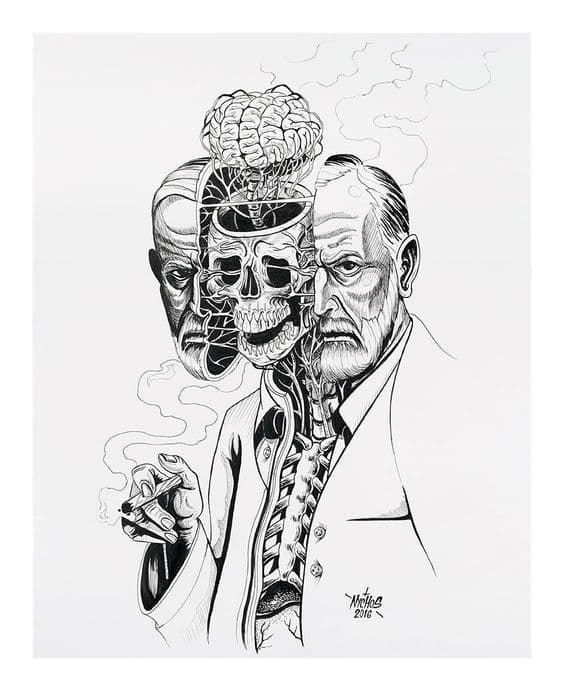
To ask "what is psychoanalysis?" is already to misunderstand it — if by the question we expect a fixed definition, a stable set of techniques, or a doctrine to which one might pledge allegiance. Psychoanalysis resists the very form of answer that a dictionary or an encyclopedia entry typically supplies. It is not a theory of mind in the way that cognitive psychology offers models of memory. It is not a therapeutic modality in the way that cognitive-behavioral therapy manuals prescribe interventions. It is, instead, a peculiar and demanding practice — one that emerged from the clinical room of Sigmund Freud in Vienna and has since dispersed into literary criticism, film theory, political philosophy, and the quiet spaces of private introspection. But at its core, psychoanalysis is an attitude: a willingness to listen for the unsaid, to suspect that what appears obvious is a disguise, and to tolerate the discomfort of not knowing what one truly wants.
This article does not aim to deliver a summary of psychoanalytic concepts as if they were facts to memorize. Rather, it invites you into a mode of questioning — an investigation of the assumptions we carry about consciousness, memory, identity, and suffering. Psychoanalysis, understood philosophically, is not a set of answers but a disciplined way of becoming suspicious of our own answers. It is an inquiry into the strangeness of being a self.
1. The Unspoken Premises: What Psychoanalysis Assumes About Mind
Every discipline rests on premises it rarely examines. Psychoanalysis is unusual in that its founding premise is a negation: the mind is not transparent to itself. You do not know why you do what you do. The reasons you give for your choices — the tidy narratives you construct about your ambitions, your loves, your irritations — are, at best, partial truths. At worst, they are elaborate decoys designed to keep something else out of sight.
This is not a cynical claim about self-deception. It is a structural observation about the architecture of experience. Psychoanalysis posits that a significant portion of mental life — including the forces that shape our most consequential decisions — operates beneath the threshold of awareness. Not hidden in the way a forgotten password is hidden (retrievable with effort), but structured into the very fabric of perception and memory. We do not have direct access to the motives that move us. We have access only to their derivatives: symptoms, dreams, slips of the tongue, jokes, and the peculiar intensity of certain attachments.
What follows from this premise is radical. If the mind is fundamentally opaque to itself, then introspection — simply "looking inward" — is insufficient. The image you hold of yourself is not a photograph but a composite, edited by forces you cannot consciously control. Psychoanalysis, therefore, begins not with a question about what you feel, but with a suspicion about the reliability of your feelings as guides to your actual condition.
"The ego is not master in its own house." — Sigmund Freud
This suspicion is not meant to paralyze. It is meant to open a different kind of investigation — one that attends to contradictions, evasions, and the moments when language stumbles. When you say something you did not intend to say, or find yourself inexplicably drawn to a person who reminds you of someone you claim to have left behind, psychoanalysis asks you to pause. Not to explain, but to wonder.
2. Beyond the Symptom: The Refusal of Obvious Meaning
The most common misunderstanding of psychoanalysis is that it seeks to uncover hidden meanings — that a dream about falling represents a fear of failure, that forgetting a name indicates repressed hostility. This is the popular Freudianism of magazines and cocktail parties, and it is almost entirely wrong — not because symptoms never carry meaning, but because meaning in psychoanalysis is never stable or singular.
A symptom (whether a phobia, a repetitive behavior, a physical pain without organic cause, or a pattern of failed relationships) is not a puzzle with a single correct solution. It is a compromise formation — a point where conflicting forces have reached an uneasy truce. A woman who cannot board elevators may indeed be enacting a fear of confinement that traces to a childhood experience. But that same symptom also protects her from something: perhaps the anxiety of upward mobility in her career, perhaps the rage she would feel if she had to confront the person waiting on the top floor. The symptom is simultaneously a message and a defense against the message. To interpret it is not to decode it once and for all, but to enter into a conversation with its ambiguity.
This refusal of obvious meaning extends to everyday life. Consider the experience of procrastination. The conventional view treats it as a time-management problem or a failure of willpower. Psychoanalysis invites a different question: What is the procrastination for? What would be lost if you finished the project, made the call, ended the relationship? Procrastination is not merely an absence of action; it is a positive force — a way of preserving a tension that feels, for reasons you may never fully grasp, safer than resolution. The deadline you miss is not a failure of discipline. It is a negotiation between parts of yourself that cannot agree on what you actually want.
This perspective is profoundly uncomfortable. It suggests that your suffering is not merely something that happens to you, but something you participate in — not through conscious choice, but through an intricate logic that operates outside your awareness. The symptom is not an enemy to be eliminated. It is a visitor with a story, and the story is never simple.
3. The Unconscious: Not a Place But a Pressure
Freud’s most enduring concept — the unconscious — has been domesticated into a metaphor: a basement of the mind where forgotten memories and repressed desires collect dust. This spatial image is useful but misleading. The unconscious is not a storage container. It is a dynamic force, a pressure that deforms conscious thought from within.
Think not of a hidden room but of the tilt in a photograph that no amount of cropping can straighten. The unconscious is the tilt. It expresses itself not in content that can be retrieved (though it does produce content in dreams and symptoms) but in the very structure of how you relate to time, to language, to other people. It is the reason you feel inexplicable guilt after succeeding, or the reason certain silences feel unbearable. It is not a thing you have; it is a way you are broken — and the word "broken" is itself too simple, because the break is also the source of desire, creativity, and the capacity for change.
One way to encounter the unconscious is through the phenomenon of repression. Repression is not the same as suppression (consciously pushing away a thought). It is an automatic process that prevents certain wishes, memories, or conflicts from ever reaching awareness. The repressed does not disappear. It returns — disguised, distorted, often in forms that seem unrelated to their origin. The person who has repressed anger toward a parent may find themselves irrationally furious at a colleague who reminds them of that parent in no obvious way. They do not know why they are angry. The anger is real; its source is hidden. This is the unconscious at work: not a secret message but a force that generates effects whose cause is invisible to the one who suffers them.
This raises a difficult question: If the unconscious is inaccessible by definition, how can we know anything about it? Psychoanalysis answers not through direct observation but through the study of its derivatives — the phenomena that bear the mark of its pressure. Dreams, slips, symptoms, jokes, and the patterns of transference in the analytic relationship are all traces. They are not the unconscious itself; they are its exhaust, its residue, its coded speech. The analyst’s task is not to read these traces as hieroglyphs with fixed translations, but to help the analysand (the person in analysis) become sensitive to their own production of these traces — to notice the slip, to wonder at the dream, to feel the weight of a repetitive choice.
4. Memory's Deceptions: Why We Are Not Our Histories
Modern psychology has confirmed what Freud suspected: memory is reconstructive, not reproductive. Every time you remember an event, you are not retrieving a pristine recording but rebuilding the past from fragments in the present, colored by current emotion, subsequent experience, and the demands of narrative coherence. Psychoanalysis takes this finding seriously — and then pushes it further.
The past does not cause the present in any simple linear way. Your childhood does not determine your adult personality as a key determines a lock. Rather, the past is re-enacted in the present — not as memory but as pattern. You do not remember your father’s withdrawal; you live it again in your tendency to marry partners who become distant. You do not recall the humiliation of a third-grade teacher; you perform it every time you sabotage your own success just before recognition arrives.
This is the psychoanalytic concept of repetition compulsion: the strange tendency to repeat painful patterns even when you consciously wish to escape them. It is as if the psyche prefers the familiar suffering to the unfamiliar possibility of relief. Repetition is not a failure of learning. It is a form of memory — a memory enacted in behavior rather than narrated in words. The body, the relationship, the career trajectory remember what the conscious mind has forgotten.
The clinical implication is counterintuitive. If you are trapped in a pattern, the solution is not to uncover the "original" trauma and thereby dissolve its power — as if memory were a poison that could be drained. Instead, psychoanalysis suggests that change occurs when the pattern is lived differently within the analytic relationship itself. The analyst becomes a new object onto whom old patterns are transferred (see Section 5). In that controlled displacement, the repetition can be recognized, named, and gradually loosened. Not erased — but loosened.
This means that psychoanalysis is not archaeology. It is not about digging up the past to catalog its artifacts. It is about understanding how the past uses the present — and whether, through that understanding, you might learn to use the past differently.
5. Transference: How the Past Occupies the Present Without Permission
If there is a single concept that distinguishes psychoanalysis from all other talking therapies, it is transference. Transference is the unconscious redirection of feelings, expectations, and relational patterns from one person to another — most famously from childhood figures onto the analyst. But transference is not confined to the therapy room. It is the invisible architecture of every significant human relationship.
You have experienced transference countless times: the boss who inexplicably feels like a disapproving parent; the new acquaintance who seems immediately trustworthy because they share a gesture with a beloved friend; the lover whose small failures trigger a rage that vastly exceeds the provocation. In each case, you are not responding to the person in front of you. You are responding to a script written long ago, with the current person unwittingly cast in a role not of their choosing.
The power of transference lies in its invisibility. When you are in its grip, you do not think, "I am transferring my feelings toward my mother onto my partner." You think, "My partner is being unreasonable." The projection feels like perception. This is what makes transference so difficult to recognize from the inside — and so potentially destructive. It is also what makes psychoanalysis, uniquely, a method for working with it. By establishing a relationship (the analytic frame) that is deliberately sparse and consistent, the analyst becomes a blank screen onto which transference patterns are projected with unusual clarity. The analysand’s reactions to the analyst — irritation, idealization, boredom, longing — become data about the analysand’s internal world, not about the analyst’s actual behavior.
"What we call transference seems to be the most powerful resistance to the treatment, but it is also the most powerful tool." — James Strachey
The therapeutic action, paradoxically, lies not in avoiding transference but in using it. When the analysand experiences the analyst as a hated father or a seductive mother, and when that experience is named and explored rather than acted upon, something shifts. The past loses its automatic grip. The analysand begins to distinguish between the script and the actual person. And with that distinction comes the possibility of choice — the possibility of responding to the present on its own terms, not as a repetition of what has already been.
Transference, then, is not a pathology to be eliminated. It is a fundamental feature of human relating. Psychoanalysis simply makes it visible — and in making it visible, offers a chance to interrupt its more painful manifestations.
6. Resistance: The Mind's Ingenious Self-Preservation
Anyone who has ever tried to change a habit, face a difficult truth, or sustain a New Year’s resolution knows that the mind fights back. Psychoanalysis gives this phenomenon a name: resistance. But it interprets resistance not as a failure of will or a lack of motivation, but as an intelligent — if misguided — form of self-protection.
Resistance is everything the psyche does to avoid coming into contact with repressed material. It shows up as forgetting appointments, arriving late, changing the subject, intellectualizing feelings instead of feeling them, becoming suddenly bored, falling in love with the analyst, or declaring that analysis is useless. From the outside, these behaviors look like obstacles to progress. From the inside of the psychoanalytic model, they are the progress — because resistance reveals where the sensitive spots are located. You do not resist approaching something neutral. You resist approaching something that threatens the existing organization of your self.
Consider the experience of approaching a memory that makes you feel ashamed. You might suddenly feel tired, or hungry, or urgently need to check your phone. The resistance is not a character flaw. It is the mind’s way of saying: This material is dangerous. If we look at it directly, the self I have constructed may not hold together. The psychoanalyst does not try to break through resistance with force or persuasion. That would be like shouting at a locked door. Instead, the analyst helps the analysand notice the resistance itself — to become curious about when it appears, what it is protecting, and how it feels to be on the verge of something unknown.
This reframing transforms resistance from an enemy into an ally. It is not something to overcome; it is something to understand. The question shifts from "How do I stop resisting?" to "What is my resistance trying to preserve?" Often, the answer is not a single memory but a whole worldview — a set of assumptions about oneself and others that, however painful, has provided stability. To give up a symptom is to give up a piece of one’s identity. And that is terrifying. Resistance is the terror’s name.
7. Dreams: The Royal Road Not to Certainty But to Questioning
Freud called dreams "the royal road to the unconscious." This phrase has been widely misinterpreted as meaning that dreams provide direct access to hidden truths — that interpretation is a matter of cracking a code. In fact, Freud’s own practice of dream interpretation was far more cautious and provisional. The dream does not give up its meaning easily. It disguises meaning through processes of condensation (multiple ideas fused into a single image) and displacement (emotional intensity shifted from a significant to a trivial element).
A dream about a key, a door, and a stranger may have no single interpretation. It may be about sexual desire, professional opportunity, a fear of exclusion, or all of these at once. Moreover, the same dream element can mean different things for different people — and for the same person at different times. Psychoanalysis does not offer a dream dictionary. It offers a method for associating to the dream: taking each image, each word, each feeling from the dream, and letting the mind wander freely from it. The meaning of the dream is not hidden behind the images; it emerges in the associations the dreamer produces.
This process is deeply unsettling for anyone who wants certainty. You cannot look up what your dream "means." You can only sit with it, speak what comes to mind, and notice patterns across weeks or months of dreams. A single dream may remain opaque. But over time, the series of dreams — the recurring figure, the repeated setting, the familiar anxiety — begins to compose a kind of signature. That signature is not a message from a hidden agent. It is a fingerprint of the dreamer’s unconscious preoccupations, shifting as the analysis progresses.
Dreams, then, are not revelations. They are provocations. They provoke curiosity, association, and the willingness to not know. This is perhaps their deepest value in psychoanalysis: they remind us that our minds produce meaning constantly, even (especially) when we sleep, and that this meaning cannot be exhausted by a single interpretation. The dream is not a puzzle to solve. It is a conversation to continue.
8. The Talking Cure: Language as Unreliable Witness
Psychoanalysis is famously called the "talking cure" — a term coined by Freud’s patient Bertha Pappenheim (Anna O.). The phrase captures something essential: that speaking, in a particular setting and with a particular kind of attention, can alter the structure of suffering. But the relationship between language and healing in psychoanalysis is far from straightforward.
Language, in the psychoanalytic view, is not a transparent medium for expressing pre-existing thoughts. Language constitutes thought — and also conceals it. When you try to say what you feel, you inevitably distort it. The very act of putting experience into words introduces categories (subject-verb-object, past-present-future, cause-and-effect) that may not fit the experience itself. Moreover, language is social; it carries the weight of what others have said to you, what you have been forbidden to say, what remains unspeakable. Your vocabulary is not your own. It is inherited, and inheritance is never neutral.
Psychoanalysis exploits the unreliability of language as a therapeutic tool. The fundamental rule of free association — "say whatever comes to mind, without censorship or selection" — is designed to bypass the usual editing functions of the conscious mind. When you free-associate, you produce a stream of words that is neither fully intentional nor fully random. In this stream, patterns emerge that are not visible in carefully edited speech. You might start talking about your mother, then suddenly mention a song you heard yesterday, then remember a dream about a staircase. The associations are not logical; they are psycho-logical — governed not by reason but by affective connections you did not know you had.
The analyst listens for gaps, contradictions, moments when the flow stops, or when the voice changes. These are not errors to be corrected. They are sites where the unconscious is expressing itself — not as content, but as rupture. The goal is not to translate the rupture into smooth narrative. It is to learn to tolerate rupture, to stay with the gap, and to let new language emerge that might hold more of what has been excluded.
This is why psychoanalysis takes time — often years. You cannot rush the relationship between language and the unconscious. The unconscious does not speak in complete sentences. It stutters, repeats, falls silent, speaks in code. To listen to it requires a kind of patience that is almost extinct in contemporary culture. But that patience, when practiced, yields something that faster methods cannot: a felt sense of the difference between the story you tell about your life and the life as it is actually lived, in all its messiness and contradiction.
9. Psychoanalysis as Negative Capability
The poet John Keats coined the term "negative capability" to describe the capacity to remain in uncertainty, doubt, and mystery without irritably reaching after fact and reason. Psychoanalysis, at its best, cultivates precisely this capacity. It is a practice of not knowing — of tolerating the anxiety that comes when explanations fail.
This is the opposite of what most people seek when they turn to therapy or self-help. They want answers: Why am I anxious? Why do I keep choosing the wrong partners? What should I do? Psychoanalysis refuses to provide these answers — not because it is cruel, but because premature answers foreclose the very inquiry that might lead to genuine change. An answer given too soon is another form of resistance: it shuts down questioning, organizes experience into a tidy package, and restores the illusion of mastery. The psychoanalyst’s job is not to provide mastery. It is to keep the question alive.
Consider a patient who insists, "I know why I’m depressed — it’s because my father never loved me." This formulation may be true as far as it goes, but it functions as a stopping point. The analysand has found a cause, and now the inquiry can end. A psychoanalytically informed response would not agree or disagree. It would ask: What is it like for you to say that sentence? What happens in your body when you say it? What do you feel toward your father in this moment — not then, but now? And what do you feel toward me for having reminded you of him? The answer does not matter. The process of asking — of staying with the discomfort of not knowing — is what matters.
This orientation extends beyond the clinic. It is a stance toward life: a willingness to be surprised by your own motivations, to distrust your certainties, to hold your self-narrative lightly. Psychoanalysis, understood philosophically, is a discipline of ignorance — not the ignorance of the uninformed, but the cultivated ignorance of someone who has learned how much they do not know about themselves.
10. The Ethical Dimension: Freedom to Want What We Don't Know We Want
Most ethical systems are concerned with actions: what you should do, what you should not do, how to treat others. Psychoanalysis shifts the focus to desire. It asks not just what you choose, but what you want — and whether what you want is truly yours.
This is a deeply uncomfortable question. We like to believe that our desires are authentic expressions of our selves. Psychoanalysis suggests that many desires are inherited, imposed, or reactive. You may want a prestigious career not because you love the work, but because your parent’s approval still matters. You may want a particular partner not because of who they are, but because they resemble (or oppose) an early figure whose love you could never secure. You may want to be free of desire altogether — to achieve a state of peaceful non-attachment — only to discover that this very desire is another form of attachment.
The ethical implication is not that you should reject your desires. It is that you should investigate them. To live ethically, in a psychoanalytic sense, is to ask: Who wants through me? Whose desire is this? This questioning does not guarantee liberation. You may discover that your most cherished desire is entirely derivative — and still choose to pursue it, because the derivative has become real. But the act of asking changes the quality of the pursuit. You are no longer driven. You are, at least potentially, choosing.
This brings us to a paradox at the heart of psychoanalytic ethics: freedom is not the absence of determination. It is the ability to know one’s determinations and to relate to them differently. You cannot escape your unconscious. But you can stop pretending you are its master. And in that stopping — that admission of ignorance — something like freedom becomes possible. Not the freedom of the autonomous will, but the freedom of the one who knows they are not autonomous and yet still acts.
11. Psychoanalysis After Freud: Divergences and Continuities
To speak of "psychoanalysis" as a single entity is misleading. Since Freud’s death in 1939, the field has splintered into multiple schools — Kleinian, Lacanian, Winnicottian, relational, intersubjective, self-psychological, and many more. These traditions disagree on fundamental questions: the nature of the unconscious, the role of the drive, the importance of early relationships, the structure of the mind, and the aim of treatment.
Yet certain commitments unite almost all psychoanalytic approaches. The table below summarizes key divergences and continuities:
Aspect | Classical Freudian | Object Relations (Klein, Winnicott) | Lacanian | Relational/Intersubjective |
|---|---|---|---|---|
Unconscious | Repressed drives (sex/aggression) | Internalized relationships with others | Structured like a language | Co-created between analyst and analysand |
Primary motivation | Drive discharge | Relatedness to objects | Desire for recognition | Mutual recognition and influence |
Role of analyst | Blank screen for transference | Container for projections | Subject-supposed-to-know | Authentic participant in relationship |
Goal of analysis | Make unconscious conscious | Integration of good/bad objects | Traverse fantasy | Develop capacity for intimacy |
Despite these differences, all schools share a core method: the use of free association, attention to transference and resistance, and a commitment to the idea that meaningful psychic material is initially unknown to the subject. They also share a common problem: how to study what cannot be directly observed. Psychoanalysis after Freud is not a single building but a city of distinct architectures, each offering a different view of the same terrain.
For the beginner, this diversity can feel overwhelming. A helpful way to navigate it is to recognize that schools of psychoanalysis are not competing theories of the same object. They are different lenses for different phenomena. A Lacanian lens highlights the role of language and the structural position of desire. A relational lens highlights the co-construction of experience in real relationships. Neither is true or false; each illuminates some aspects while leaving others in shadow. The question is not which school is right, but which lens is useful for the question you are asking.
12. The Question of Cure: Does Psychoanalysis Have an Aim?
Perhaps the most contested question in psychoanalysis is whether it has a definable endpoint. Does it aim to eliminate symptoms? To achieve self-knowledge? To enable love and work? To produce a particular kind of ethical subject? Different analysts have given different answers, and many have rejected the medical model of "cure" altogether.
One influential answer comes from the British analyst Donald Winnicott, who said the goal of analysis is to help the patient "feel real." Not happy. Not adjusted. Not symptom-free. But real — capable of spontaneity, play, and a sense of existing in one’s own skin. This is a modest aim, in some ways, and an impossibly ambitious one in others. Most people spend their lives performing versions of themselves for others, or living according to scripts they did not write. To feel real is to have access to the experience of being the author of one’s own gestures, even when those gestures are imperfect.
Another answer comes from the French analyst Jacques Lacan, who said that the end of analysis is not the elimination of desire but its purification — the ability to distinguish one’s own desire from the desire of the Other (parents, culture, the analyst). The analysand who has traversed the fantasy no longer asks, "What do they want from me?" They are able to say, "I want this, and I do not need you to guarantee it." This is not a state of permanent satisfaction. It is a state of resigned acceptance that satisfaction is always partial, that the object of desire is always lost, and that this loss is what makes desire possible.
A conceptual table summarizes possible aims:
Aim | Description | Critique |
|---|---|---|
Symptom reduction | Alleviate specific suffering (panic, depression, etc.) | Reduces psychoanalysis to behavior modification |
Self-knowledge | Increase conscious awareness of unconscious dynamics | Knowledge alone does not change patterns |
Capacity for love and work | Freud’s famous formulation of mental health | Assumes normative definitions of love and work |
Acceptance of limitation | Recognize that not all desires can be fulfilled | Risks resignation or quietism |
Feeling real (Winnicott) | Authentic spontaneity and embodiment | Difficult to measure or verify |
Traversing fantasy (Lacan) | Separate desire from external guarantees | Abstract; may not relieve suffering |
What unites these diverse aims is a rejection of the idea that analysis "cures" in the medical sense. It does not remove something foreign (a virus, a tumor). It reorganizes the relationship between the subject and their own experience. Symptoms may disappear, but they may also transform into something more livable. The measure of a successful analysis is not the absence of suffering but the capacity to suffer differently — with more awareness, less compulsion, and a greater range of response. Whether that counts as a cure is a question that only the analysand, in the end, can answer.
Closing Reflection: The Unfinished Self
Psychoanalysis offers no final answers. It offers a method for living with questions. It suggests that the self is not a stable essence but a process — an ongoing negotiation between conscious intention and unconscious pressure, between the past that lives on and the future that resists prediction. To undergo psychoanalysis, or simply to take its insights seriously, is to accept that you will never fully know yourself. And that acceptance, far from being a defeat, is a form of liberation. It frees you from the tyranny of having to be coherent. It allows you to be contradictory, unfinished, and still worthy of your own attention.
The world outside the consulting room will continue to demand certainty, productivity, and the performance of a unified self. Psychoanalysis is a quiet rebellion against those demands. It is a space — and a practice — in which it is permissible to not know, to contradict oneself, to speak without a script. That permission, hard-won and easily lost, is perhaps the most valuable thing psychoanalysis has to offer. Not the truth about the unconscious. But the freedom to keep asking.
Frequently Asked Questions
Is psychoanalysis still relevant today?
Yes — though not in the way its early advocates imagined. While psychoanalysis has been critiqued for its lack of empirical validation and its high cost, its concepts (unconscious motivation, defense mechanisms, transference) have been integrated into many other therapeutic approaches. Moreover, contemporary research in neuropsychology and implicit memory has found parallels with psychoanalytic ideas. Its relevance today is perhaps strongest outside the clinic: in literature, film, critical theory, and as a philosophical lens for understanding culture and subjectivity.
How is psychoanalysis different from other therapies like CBT?
Cognitive-behavioral therapy focuses on conscious thoughts and behaviors, aiming to change maladaptive patterns through structured exercises and homework. Psychoanalysis focuses on unconscious processes, early relationships, and the therapeutic relationship itself. It is typically longer-term, less structured, and aims not at symptom reduction but at a broader reorganization of personality. Neither is inherently superior; they suit different problems and different people.
Does psychoanalysis work? What does the evidence say?
Research on psychoanalytic outcomes is more positive than critics often claim. Meta-analyses have shown that long-term psychoanalytic therapy produces significant and lasting improvements for complex mental disorders, with effects that often increase after treatment ends (unlike some shorter-term therapies). However, the evidence base is smaller than for CBT, and methodological challenges persist — partly because the goals of psychoanalysis are not easily measured by symptom checklists.
How long does psychoanalysis take?
Traditional Freudian analysis (four to five sessions per week) often lasted years. Contemporary psychoanalytic psychotherapy (one to three sessions per week) may last from several months to several years. The duration depends on the depth of the issues, the frequency of sessions, and the goals. Brief psychodynamic therapies (12-20 sessions) exist but are not the same as full psychoanalysis.
Do I need to lie on a couch?
The couch is a traditional feature of classical analysis, intended to reduce visual cues and help the analysand free-associate more freely. Many contemporary analysts use the couch for some patients and chairs for others. It is not essential to the process; what matters is the creation of a consistent, private space in which speech can flow.
Is psychoanalysis only for wealthy people?
Historically, yes — its length and cost have made it inaccessible to many. However, there are community clinics, training institutes offering low-fee analysis (analysts in training), and psychoanalytic psychotherapy practiced in public health systems. Some countries (e.g., Germany, France) integrate psychoanalysis into national healthcare. The cost barrier is real but not absolute.
Can I do psychoanalysis on myself?
No. Psychoanalysis requires another person — an analyst — to receive free associations, to hold the frame, and to point out blind spots that cannot be seen from inside. Self-analysis is a contradiction in terms, because the unconscious mechanisms that need to be observed are the same mechanisms that would do the observing. However, reading psychoanalytic theory and practicing self-reflection can be valuable supplements to (not substitutes for) analysis.